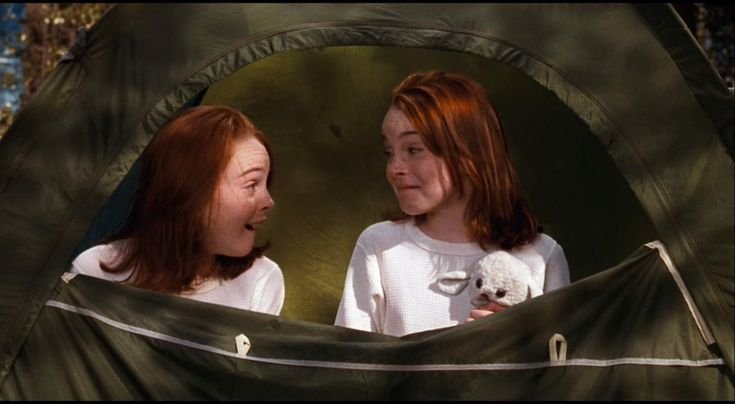
When you think of a classic family film, chances are The Parent Trap springs to mind. But which one? For many, the answer depends on their generation. The magic of twin sisters, separated at birth, who serendipitously meet at summer camp and hatch a daring plan to reunite their divorced parents, has captivated audiences for decades. It's a tale so endearing, it's been told twice by Disney: first in 1961 with Hayley Mills in the dual role, and again in 1998 starring a young Lindsay Lohan.
While the core premise remains remarkably steadfast across both versions, [Comparing The Parent Trap (1998) with the 1961 Original] offers a fascinating study in how cultural context, cinematic techniques, and subtle script tweaks can refresh a beloved story. More than simple remakes, these films are time capsules, reflecting the era in which they were made while proving the timeless appeal of love, family, and a dash of mischievous ingenuity.
At a Glance: The Tale of Two Traps
- Core Story: Identical in both films – separated twins meet at camp, switch places, and scheme to get parents back together.
- Star Power: Hayley Mills (1961) was a Disney star; Lindsay Lohan (1998) was a breakout talent. Both played both twins convincingly.
- Technological Leaps: The 1998 film leveraged advanced visual effects to seamlessly portray Lohan as two characters, a significant upgrade from the earlier version's split-screen and body double techniques.
- Cultural Updates: From celebrity crushes (Ricky Nelson vs. Leonardo DiCaprio) to modes of transport (Boston vs. London, standard flight vs. Concorde), the 1998 film modernized details while retaining the original's charm.
- Dialogue & Personalities: Much of the witty dialogue and the twins' core personalities (outdoorsy vs. sophisticated) were directly carried over, demonstrating the strength of the original script.
- Villainous Fiancée: Both films feature a memorable "other woman" in the father's life, determinedly — and hilariously — thwarted by the twins. Elaine Hendrix's portrayal of Meredith Blake in the 1998 version left an indelible mark.
The First Impressions: Credits and Camp Arrival
From the moment the opening credits roll, both films establish their distinct identities while hinting at the shared journey.
Setting the Scene: Opening Credits
The 1961 original kicks off with a charming stop-motion puppetry sequence. It’s a whimsical summary of the plot: two distinct families, two non-identical daughters, and a surprise twist. This playful introduction, featuring the Sherman Brothers' catchy title song "The Parent Trap" performed by Annette Funicello and Tommy Sands, immediately signals a lighthearted, family-friendly adventure. The parents are introduced simply as John and Marsha.
Fast forward to 1998, and the opening is strikingly different, adopting a more sophisticated and nostalgic tone. We're treated to live-action "home video" footage of Nicholas Parker (a Californian viticulturist) and Elizabeth James (a British wedding dress designer) meeting and marrying aboard the opulent ocean liner Queen Elizabeth 2 on January 8, 1986. The romantic "L-O-V-E" by Nat King Cole sets a luxurious, slightly melancholic mood, establishing the parents' epic love story right from the start. It's a clever way to build emotional stakes before the twins even appear.
Welcome to Summer Camp: Where Destinies Collide
Both tales begin at an all-girls summer camp, the unlikely crucible for this extraordinary reunion. The 1961 film sets its stage at Camp Inch, while the 1998 version features Camp Walden. Fans of the original might notice a clever Easter egg in the remake: Camp Walden's owners, Marva Kulp and Marva Kulp Jr., are named after actress Nancy Kulp, who played Miss Grunecker, the stern but memorable counselor in the 1961 film.
The contrasting personalities of the twins are immediately evident. In 1961, Susan is the California girl, living with her father. She's outdoorsy, loves horseback riding, and sports shorter hair. Her counterpart, Sharon, lives with their mother in Boston and embodies a more sophisticated, slightly prim demeanor. Similarly, in 1998, Hallie, the Californian, lives with her father and shares Susan's active, horseback-riding spirit and shorter hair. Annie, her London-based sister, living with their mother, mirrors Sharon's refined upbringing. Interestingly, both versions use the "Arapaho" or "Arapahoe" cabin, but it houses Sharon in 1961 and Hallie in 1998, a minor but notable swap.
Their first encounters also differ slightly in staging. In 1961, Susan and Sharon first meet in the food line, reaching for the same drink. The 1998 version opts for a more dramatic, competitive introduction after a fencing match. In both cases, the initial reaction is denial of any similarity, quickly followed by mutual teasing and an immediate rivalry.
Pranks, Isolation, and the Truth Unfolds
The rivalry between the newly met twins quickly escalates into a series of elaborate pranks, leading to their forced isolation—a crucial turning point that paves the way for their bonding.
Prank Wars: A Battle of Wits
The pranks orchestrated by the twins are iconic, showcasing their ingenuity and competitive spirit.
In the 1961 film:
- Sharon maliciously flips Susan's canoe.
- Susan retaliates by covering Sharon's cabin with string, honey, and hay.
- Later, at a camp dance, Sharon cuts Susan's dress, leading to a spectacular, destructive dance fight that leaves the hall in shambles.
The 1998 remake offers similar but updated hijinks: - Hallie, after Annie loses a poker game, takes Annie's clothes, forcing her to jump naked into the lake.
- Annie responds by putting Hallie's furniture on the roof of their cabin.
- Hallie then deploys the classic string, honey, and hay trap on Annie's cabin, leading to a comical inspection scene where the Marvas (the camp owners) fall victim.
The "Serendipity" Cabin: Forced Proximity
The consequence of these escalating pranks is the same: both sets of twins are sent to an isolation cabin, famously dubbed "Serendipity" in the 1961 film. The march to isolation is memorable, with fellow campers whistling the "Colonel Bogey March" behind them in the original, or the tune playing as score in the remake. This forced, confined proximity, where they must eat and live together, is precisely what they need to move past their animosity.
The Breakthrough: Shared Secrets and Discoveries
It’s within the walls of their isolation cabin that the truth begins to unravel. The bonding typically starts when one twin's photos fall, and the other helps tidy up. This leads to shared confidences, including celebrity crushes—Ricky Nelson in the 1960s, a testament to the era, and Leonardo DiCaprio in the 1990s, capturing the Titanic phenomenon.
Crucially, both sets of twins discover their matching birthdays: Susan and Sharon turn 14 on November 12th, while Hallie and Annie turn 12 on October 11th. The 1998 version adds a charming detail: Hallie and Annie also share an unusual love for Oreos with peanut butter, a quirky bonding element that highlights their identical nature.
The "chills" moment, where Sharon/Annie first suspect something deeper, usually occurs while Susan/Hallie are primarily focused on being hungry. The connection to being twins is firmly made through photos of their parents. In the 1961 film, only Sharon possesses a photo of their mother that Susan recognizes, prompting the realization. The 1998 version modernizes this: both Hallie and Annie have photos of their "missing" parent, and they also possess matching lockets with "H" and "A" engravings. It's a powerful and emotional reveal.
Upon understanding their shared heritage, Sharon/Annie note that neither parent has remarried, cementing the idea that their parents still might have feelings for each other. This observation gives rise to the audacious plan: switching places. Susan/Hallie propose the idea, with Sharon/Annie believing their parents "will have to unswitch us."
The Grand Switch: Prep Work and Parental Deception
The decision made, the twins embark on a crash course in impersonation, a delightful montage of preparation that highlights their commitment and cleverness.
The Twin Transformation
To pull off the ultimate switch, the girls must become indistinguishable. The physical transformations are key:
- In both films, Susan/Hallie cut Sharon/Annie's hair to match their own shorter style.
- Susan tells Sharon to bite her nails, a detail for her outdoorsy persona.
- Hallie pierces Annie's ears, giving her a more bohemian edge.
Beyond appearance, the learning curve is steep. Both films show sequences of the twins diligently studying each other's lives. This includes poring over posters on bedroom walls, absorbing family histories, and using cue cards to memorize key details. They quiz each other relentlessly on friends' names, favorite foods, and school experiences.
A critical task for both Susan/Hallie is to learn the intricate details of how their parents met and their first date. This knowledge will be vital for connecting with their "new" parent. The 1998 film adds a specific assignment for Annie that wasn't assigned to Sharon in 1961: she must learn why their parents split, adding a layer of understanding to her mission. As they prepare to part ways, both sets of twins cross their arms and fingers, a shared gesture of good luck and mutual support, cementing their bond.
Navigating New Worlds: Life with 'New' Parents
With the switch complete, the twins step into unfamiliar lives, each encountering their "new" parent and the formidable challenge of their father's fiancée.
Life with Mom: Sophistication and Surprise
Susan (as Sharon) travels to Boston, and Hallie (as Annie) to London, both by limo, greeted with the inevitable, "What have you done to your hair?"—a perfectly pitched reaction to their recent haircuts. Both mothers reside in homes featuring grand entrances and impressive staircases, providing dramatic backdrops for their eventual reveals.
The grandfather meeting is a heartwarming moment in both. The line, "Is that my little girl? That tall gangly thing?" is used verbatim, followed by Susan/Hallie sniffing his jacket, wanting to remember his comforting "peppermint and [pipe] tobacco" scent. The 1961 film includes a grandmother, adding another layer to the family dynamic, while the 1998 version focuses solely on the grandfather. The dramatic reveal of the twins' mother descending the staircase is a beautifully shot scene in both, showcasing their elegance and grace.
- In 1961, Margaret is a socialite who discusses the parents' first date at Martinelli's, an Italian restaurant, with Susan.
- In 1998, Elizabeth is a renowned wedding dress designer who brings Hallie along to a photoshoot, sharing stories of her meeting Nick on the QE2. These details ground the parents' backstories in their respective eras and professions.
Life with Dad: Ranches, Vineyards, and the 'Other Woman'
Meanwhile, Sharon (as Susan) and Annie (as Hallie) are picked up by their fathers from the airport. Mitch (1961) lives on a ranch in Carmel, while Nick (1998) owns a picturesque vineyard in Napa. Both fathers tease their "daughter" about "newsy letters" from camp, unaware of the profound truth behind their child's newfound sophistication.
The housekeepers, Verbena (1961) and Chessy (1998), are the first adults to sense that something is profoundly off. Their astute observations, coupled with the family dogs—Andromeda (1961) and Sammy (1998)—barking as if not recognizing the twin, hint at the disruption. Both housekeepers eventually ramble about the dad "making a ninny/fool of himself" with his new fiancée, claiming it's "none of their business" even as they clearly disapprove.
The fathers' fiancées are formidable obstacles: Vicky Robinson (1961), encountered in the courtyard, and Meredith Blake (1998), introduced on the patio. Both Sharon/Annie quickly hint at their dad having "many girlfriends" to try and scare them off. Meredith, notably, references a "Mr. Mosby," a clear nod to the reverend in the 1961 film. The twins call Meredith "Cruella de Vil," a sharp, memorable jab.
Sharon/Annie, eager to reunite their parents, call Susan/Hallie to bring their mom to California, but the other twin refuses, wanting more time with Margaret/Elizabeth. The dads' attempts to discuss their fiancées are constantly, and hilariously, thwarted. Sharon/Annie even go horseback riding with Mitch/Nick but strategically run off whenever the fiancée is mentioned.
The fiancées' plans for the twins are equally dreadful: Vicky wants to send Sharon to boarding school in Switzerland, while Meredith intends to send Annie to Timbuctoo. This confirms to the twins that these women are not fit to be their stepmothers.
It's the housekeepers who figure out the switch first, both using the telling line, "It's almost as if you were....." The twins, pushing boundaries, pretend the fiancée is an adoption. Sharon (1961) plays the piano, while Annie (1998) yells in French, both using the flimsy excuse, "I learnt it at camp!" before unleashing their frustration on their dad. The subsequent "woman-to-woman chats" between the fiancée and the twins only increase the tension, further solidifying the fiancées' negative image.
The Reunion and Reckoning: Parents Reunited
The stage is set for the inevitable, explosive reunion of the estranged parents, orchestrated by their determined daughters.
Orchestrating the Confrontation
Realizing they need bigger guns, Sharon/Annie send emergency telegrams/faxes to Susan/Hallie. In both narratives, the Grandfather discovers the deception and, understanding the twins' true intentions, helps facilitate the parents' meeting.
The actual meeting scenes unfold with subtle but impactful differences:
- In the 1961 film, Margaret and Susan travel directly to Mitch's home, where Mitch and Vicky (along with her mother and Rev. Dr. Mosby) are discussing wedding plans. Margaret hides outside before making her dramatic entrance, leading to a shocked Mitch tripping over furniture in his surprise.
- The 1998 film brings Elizabeth, Hallie, and Martin (the dapper butler) to the Stafford Hotel in San Francisco—a clever reference to Stafford, a boy Susan danced with in the 1961 film. Meredith's mother, Vicki (played by Joanna Barnes, who was Vicky in the original!), is also present. Nick spots Elizabeth in the elevator, leading to a stunned, almost dreamlike encounter.
Both Mitch and Nick, in a classic comedic beat, fall into a lake or pool the second time they see their ex-wife, a perfectly synchronized moment of shock and perhaps residual longing.
Recreating Romance: The First Date Redux
The twins, ever the masterminds, decide to recreate their parents' first date to rekindle the old flame.
- In the 1961 version, this involves a makeshift "Martinelli's" on Mitch's terrace, complete with Italian decor and atmosphere. The twins perform "Let's Get Together," a song heard earlier on a record by Annette Funicello.
- The 1998 film orchestrates a more elaborate re-enactment on a rented yacht, meticulously decorated to resemble the Queen Elizabeth 2. "Let's Get Together" in this version is heard only once, when Hallie sings it to herself at the Stafford Hotel, making its absence in the yacht scene more poignant.
The Not-So-Great Outdoors: Sabotaging the Engagement
With sparks undeniably flying between the ex-spouses, the twins introduce the ultimate test: a family camping trip, strategically designed to expose the fiancées' true colors.
The Camping Trip Demand
The twins appear in identical outfits, further confusing their parents and forcing their hand. They demand that all four adults—Mitch/Nick, Margaret/Elizabeth, and Vicky/Meredith—go on a camping trip before they reveal the switch. This bold move ensures the fiancées are thoroughly integrated into the "family" dynamic. Margaret/Elizabeth cleverly trick Vicky/Meredith into agreeing, with Margaret's iconic line, "What should I do? Stay home and knit?" echoing in both films.
Pranks in the Wild: A Fiancée's Worst Nightmare
The camping trip becomes a masterclass in psychological warfare, as the twins unleash a barrage of pranks designed to push Vicky and Meredith past their breaking points.
1961 Pranks:
- A lizard placed on Vicky's water bottle.
- Convincing Vicky that hitting sticks scares mountain lions, leading her to incessantly whack them together.
- Tricking Vicky into believing the lake is knee-deep, only for her to plunge into deeper water.
- Replacing bug repellent with sugar and water.
- Covering their tent in string and honey, attracting a swarm of bear cubs.
1998 Pranks: - Placing heavy rocks in Meredith's hiking bag.
- A lizard on Meredith's water bottle, then on her head.
- The classic sugar and water mosquito repellent swap.
- A humorous reference to the original, with Meredith hitting sticks to ward off imaginary animals.
- Putting Meredith's air mattress on the lake while she sleeps, sending her floating.
Both films share classic lines during these trips: "Sure you will help me, right over a cliff you will help me," and the memorable exchange, "I don't eat trout. What's for breakfast?” “Trout!”
The camping trips culminate predictably: both Vicky and Meredith freak out, destroying their respective campsites in frustration and anger. This public display of their unsuitability for family life leads to the inevitable—they break off their engagements with Mitch/Nick, leaving the path clear for the original parents.
Happily Ever After (The Second Time Around)
After the chaos of the camping trip, the final scenes bring a sense of resolution and romance, though each film delivers its "happily ever after" with distinct stylistic choices.
The Grand Finale
Once back home from the disastrous camping trip, Mitch/Nick and the twins settle in, allowing for the rekindling of the original romance.
1961 Ending:
Mitch and Margaret share a romantic dinner, a quiet moment of reconnection. Susan then wakes from a dream, vividly recounting her parents remarrying. The very next scene, a classic Disney fairytale ending, shows their wedding by the picturesque ranch lake, a complete and satisfying resolution to their journey.
1998 Ending:
Nick and Elizabeth share a more intimate, romantic moment amidst Nick's extensive wine collection, showcasing their shared passion and chemistry. The film initially concludes with Elizabeth and Annie flying back to London. However, in a delightful surprise, Nick and Hallie, having taken the supersonic Concorde, are waiting for them. The film culminates with Nick and Elizabeth sharing a heartfelt kiss, followed by a montage of photos during the end credits, depicting their second wedding aboard the Queen Elizabeth 2, bringing their love story full circle to where it began.
The Enduring Magic: Why Both Versions Resonate
The Parent Trap in both its 1961 and 1998 incarnations stands as a testament to the enduring power of a beautifully crafted story. While the 1961 original set the gold standard with Hayley Mills' double performance and charming, era-specific details, the 1998 remake masterfully updated the narrative for a new generation. Lindsay Lohan's star turn, combined with advanced visual effects and a slightly more contemporary sensibility, proved that a beloved tale could be retold without losing its heart.
Both films, each exceeding two hours in runtime, give viewers ample time to fall in love with the characters and become invested in their journey. They offer not just entertainment, but a warm, fuzzy feeling of hope and family unity. Whether you prefer the classic charm of the early 60s or the polished nostalgia of the late 90s, the core message remains powerful: sometimes, it just takes a pair of determined twins to remind two people meant to be together that love is always worth fighting for.