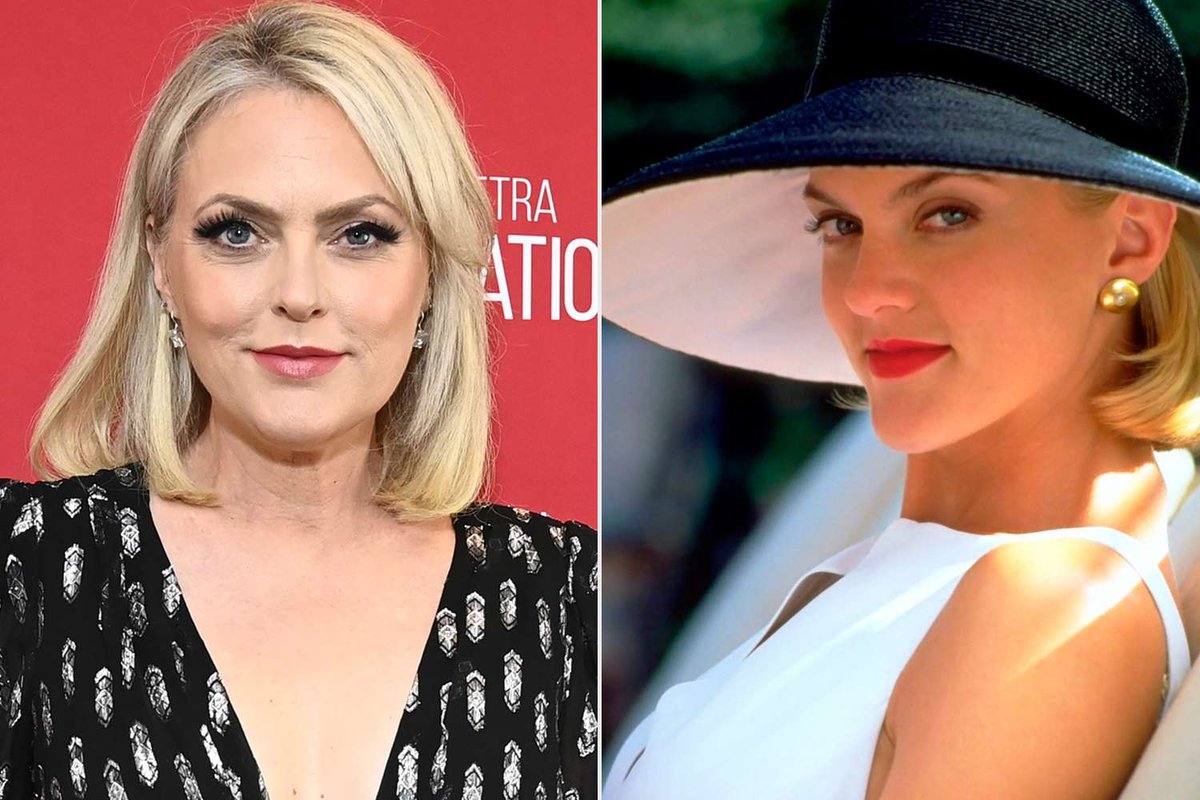
It’s been over two decades since The Parent Trap graced our screens, introducing a generation to the mischievous twins Hallie and Annie, their separated parents, and a certain impeccably dressed, strikingly ambitious publicist named Meredith Blake. For years, Elaine Hendrix's role as Meredith Blake in The Parent Trap was widely—and, perhaps, unfairly—cast as the quintessential Disney villainess, the cold-hearted interloper threatening to shatter a family's chance at reunion. Yet, as the film's enduring legacy grows, a fascinating shift in perception has emerged, championed by none other than Hendrix herself: Meredith Blake, she argues, was fundamentally misunderstood.
Forget the simplistic "wicked stepmother" trope. In recent years, a vocal legion of fans, particularly millennials who grew up with the film, have begun to re-evaluate Meredith. They've traded indignation for empathy, seeing not a villain, but a woman genuinely in love, albeit with questionable judgment in dealing with two pre-teen saboteurs. This evolving conversation, heavily influenced by social media, has not only cemented Meredith Blake's status as an undisputed pop culture icon but has also given Elaine Hendrix a platform to defend her character "tooth and nail," as she puts it, for her entire career.
At a Glance: Meredith Blake's Enduring Legacy
- The "Villain" Reimagined: For decades, Meredith Blake was seen as the antagonist, but many fans (and Elaine Hendrix) now argue she was simply a woman caught in an impossible situation.
- Elaine Hendrix's Defense: The actress has consistently maintained that Meredith was a "good guy" from her character's perspective, justifying every action.
- Millennial Influence: A new generation discovered the film and actively reassessed Meredith, sparking a cult following and countless memes.
- Prank Victim: Meredith suffered immensely at the hands of Hallie and Annie's elaborate schemes, raising questions about who was truly the instigator of conflict.
- Iconic Status: Despite her initial portrayal, Meredith Blake is now celebrated for her distinct style, ambition, and unforgettable lines, making her a beloved figure for Halloween and pop culture references.
- Sequel Hopes: Elaine Hendrix is open to reprising her role, underscoring her deep affection for the character.
The Woman Behind the Persona: Elaine Hendrix's Enduring Defense of Meredith Blake
When an actor embodies a character, especially one as memorable as Meredith Blake, there’s an inherent need to understand and justify their motivations. For Elaine Hendrix, this wasn't just a job; it was a deep dive into Meredith's psyche that led her to a conclusion far removed from the audience's initial judgment. "My whole career, I’ve defended Meredith Blake, tooth and nail," Hendrix revealed to Entertainment Weekly. This isn't just an actress playfully standing by her work; it’s a genuine perspective born from the creative process itself.
Think about it from an actor's standpoint. You're not trying to be "the bad guy." Instead, you're looking for the humanity, the drive, the internal logic that makes your character tick. Hendrix explains this perfectly: "As an actor, when you create a character, you’re not sitting there going, well, I’m the bad guy so I’ll do this. I had to justify everything she did and believe in her. I had to think, she’s the good guy!" This profound commitment to her character's truth allowed her to infuse Meredith with a layer of conviction that, perhaps, audiences initially misinterpreted as pure malice.
For Hendrix, Meredith was a woman pursuing love and a stable relationship with a successful man, Nick Parker. In her world, the twins were the unexpected, chaotic element that threatened her meticulously planned future. Was she graceful about it? No. Was she overtly warm and fuzzy? Absolutely not. But from her vantage point, she was simply trying to navigate a complex family dynamic and establish her place within it. It’s a powerful testament to Hendrix’s skill that she could present such a divisive character with such conviction, laying the groundwork for the generational reassessment we see today. Her portrayal in Elaine Hendrix in The Parent Trap continues to spark debate and adoration, a rare feat for any cinematic figure.
Reassessing the "Villain": Why Meredith Blake Isn't Who You Thought She Was
The concept of a "villain" in children's films often paints in broad strokes: clear good, clear evil. Meredith Blake, with her sharp wit, elegant wardrobe, and thinly veiled disdain for children, seemed to fit the bill perfectly for a long time. However, the rise of digital culture and the sheer endless re-watches The Parent Trap has garnered, particularly among millennials, has fueled a fascinating re-evaluation.
This generation, perhaps less inclined to accept simple narratives, began to question the underlying assumptions. Was Meredith truly evil, or was she just… human? Consider her situation: she's a successful publicist, engaged to a handsome, wealthy vineyard owner. She walks into a situation involving two identical, estranged twin daughters who clearly despise her from the outset. Her fiancé's ex-wife, whom he still clearly has feelings for, is also suddenly back in the picture. That's a lot for anyone to handle, let alone someone who appears to value order and control.
Meredith's "villainy" often boils down to her ambition and her sometimes-blunt honesty about not wanting children. While her methods might have been abrasive, her ultimate desire was a stable life with Nick. When she finally gives Nick the ultimatum – "It's me or them!" – it's less the cry of a purely evil character and more the desperate plea of someone at their breaking point, cornered by relentless torment and a fiancé who seems unable to manage his own family chaos. In a world where career-driven women are increasingly celebrated, Meredith's ambition now reads as aspiration, not villainy, leading many to wonder if her "badness" was simply a byproduct of an immature perspective.
The Prank Problem: Meredith as Victim, Not Perpetrator
One of the most compelling arguments for Meredith Blake's reassessment lies in the sheer scale of the pranks inflicted upon her by Hallie and Annie. The twins' schemes were not minor childhood mischief; they were calculated, relentless, and at times, downright dangerous acts of psychological and physical torment.
Let's recount a few:
- The Lizard Incident: Perhaps the most iconic. Meredith finds a live lizard in her water bottle. The sheer visceral disgust and shock are palpable. Imagine the horror of realizing you almost drank a reptile, all orchestrated by two children.
- The Air Mattress Debacle: Set adrift in the middle of a lake on an air mattress, miles from shore. This wasn't just inconvenient; it was genuinely frightening and potentially life-threatening if the weather turned.
- The Sugar and Salt Swap: A classic prank, but combined with the lizard and the lake, it contributes to a feeling of constant siege.
- The Scorpions: While perhaps not explicitly shown as delivered, the implication of insects, especially venomous ones, in one's bed is a serious form of harassment.
- The Forced Ultimatum: Ultimately, the twins push Meredith to her emotional limits, forcing her to confront Nick with the impossible choice between her and his daughters.
From Meredith’s perspective, these were not playful japes but targeted attacks designed to drive her away. Who, in such a situation, wouldn't lash out? Her frustrated outbursts and increasingly desperate attempts to regain control can be viewed less as villainous behavior and more as understandable reactions to extreme provocation. She was, in essence, being bullied out of a relationship she genuinely believed in. This reversal of roles—Meredith as the victim, the twins as the aggressors—is a cornerstone of her modern-day defense and a key reason why Elaine Hendrix feels so strongly about her character's unjust reputation.
Beyond the Bad Guy: Meredith Blake's Icon Status
For a character initially intended to be the antagonist, Meredith Blake has achieved a level of pop culture immortality that few villains, or even heroes, can claim. She's not just a memorable character; she's an icon. This evolution from despised to celebrated is truly remarkable.
"There’s not a day that goes by that I don’t get posted, I don’t get an email, stopped on the street, I don’t get something about her, and that’s incredible in the span of anyone’s career," Elaine Hendrix shared. Her gratitude for this enduring legacy is evident, and it speaks volumes about the impact the character has had.
Why the adoration? It’s a multifaceted phenomenon:
- Fashion Forward: Meredith’s impeccable wardrobe—those stylish hats, the pristine suits, the chic sunglasses—has become a source of admiration. She was, and still is, a fashion icon.
- Unapologetically Ambitious: In a cultural landscape that increasingly values strong, independent women, Meredith’s drive and desire to secure her future are now seen as aspirational rather than calculating.
- Relatable Frustration: Her exasperation with the twins, while extreme, resonates with anyone who has ever felt overwhelmed or pushed to their limits by chaotic situations or difficult children. Her "I don't need this!" energy is surprisingly relatable.
- Memes and Merchandise: Meredith Blake has become a goldmine for internet culture. Her exasperated expressions, dramatic pronouncements, and iconic scenes are perfect fodder for memes, GIFs, and even Halloween costumes. People love to dress up as her, embodying her fierce, elegant energy.
This cultural embrace speaks to a deeper connection than simple villainy. People see a character with depth, humor, and a certain undeniable charisma. It’s "great fun," as Hendrix admits, to see her character celebrated in this way, proving that the most compelling characters are often those who defy easy categorization.
A Legacy for Generations: The Parent Trap's Timeless Appeal
The enduring popularity of The Parent Trap isn't just about the charming performances of Lindsay Lohan as Hallie and Annie, or the magnetic chemistry between Dennis Quaid and Natasha Richardson. It's about a confluence of elements that create a genuinely timeless film, and Meredith Blake plays an undeniable role in that.
The film's blend of heartwarming family themes, slapstick comedy, and a touch of romantic yearning appeals across generations. It’s a story about the universal desire for family, connection, and a bit of playful rebellion. Meredith Blake, as the primary obstacle to the twins' grand plan, provides the necessary tension and conflict that drives much of the plot. Without her, the stakes wouldn’t feel as high, and the twins’ ingenious machinations wouldn't have such a clear target.
Her character's re-evaluation only adds another layer of complexity and discussion to the film, inviting viewers to delve deeper into its nuances. It’s a sign of truly good storytelling when characters, even those designed to be antagonists, can evolve in the public consciousness, sparking new conversations and enriching the viewing experience for subsequent generations. The film's "long legs," as Hendrix describes them, are undoubtedly a testament to its multifaceted appeal, in which Meredith Blake's controversial charm is a vital ingredient.
Looking Ahead: Could Meredith Blake Return?
Given the undeniable impact Meredith Blake has had on pop culture, and Elaine Hendrix's clear affection for the character, a natural question arises: could she ever return to the world of The Parent Trap?
Hendrix herself is enthusiastic about the prospect. "Hands down, in the right situation," she would join a potential sequel if asked. Her attachment to Meredith is palpable: "I’d be so crushed if she wasn’t part of a sequel." This isn't just an actress wanting work; it's a genuine desire to revisit a character she loves and has fiercely defended for years.
The challenge, as Hendrix wisely points out, is "How would you bring Meredith Blake back into the sequel?" Her character's departure from the original film was rather definitive – cast off into the lake, rejected by Nick. A return would require creative writing to plausibly reintroduce her. Perhaps she's found a new powerful partner, perhaps she's mellowed, or perhaps she's still holding a grudge. The possibilities are tantalizing, and the prospect of seeing an older, wiser (or perhaps even more flamboyant) Meredith Blake interacting with adult Hallie and Annie is certainly something fans would flock to see.
Interestingly, Elaine Hendrix recently had another reunion with Lindsay Lohan, appearing in a cameo for Freakier Friday. This brief on-camera moment, the first since The Parent Trap 27 years ago, highlights the enduring connections formed on set and the warmth between the cast members. "I’m so happy for her and where she is in her life," Hendrix said of Lohan, underscoring the real-life bonds that extend beyond their on-screen rivalry. This professional reunion only fuels speculation and hope for a full-fledged return of Meredith Blake, proving that some iconic characters truly deserve a second act.
Understanding the Nuance: Why Our Perception of Characters Evolves
The evolution of how we view Elaine Hendrix's role as Meredith Blake isn't just a quirky internet phenomenon; it's a powerful illustration of how our understanding of film characters and narratives can change over time. As society progresses and our collective perspectives shift, so too does our lens for interpreting stories.
For years, the "wicked stepmother" was a pervasive trope, easily slotting characters like Meredith into a predetermined box. But with increased awareness around gender roles, female ambition, and the complexities of blended families, audiences are less content with one-dimensional villains. We crave nuance, motivation, and a more robust understanding of why characters act the way they do.
Meredith Blake's reassessment encourages us to look beyond initial impressions and challenge the clear-cut good-versus-evil dichotomies often presented in popular media. It reminds us that:
- Context is Key: A character's "villainy" often depends heavily on the context of their situation and the perspectives through which we view them.
- Empathy Expands: As we mature and gain more life experience, our capacity for empathy grows, allowing us to see difficult characters not just as antagonists, but as complex individuals with their own struggles.
- Cultural Shifts Influence Interpretation: What was once considered a negative trait (like overt ambition in a woman) can become celebrated as a positive one over time.
This re-examination is not just about one film; it's a broader cultural practice that enriches our engagement with art. It pushes us to be more critical viewers, to question narratives, and to appreciate the intricate tapestry of human experience that even fictional characters can embody.
A Final Word on Meredith Blake: More Than Just a "Witch"
Meredith Blake, as brought to life by Elaine Hendrix, stands as a testament to the power of a well-crafted character—one so vivid, so memorable, that she transcends her initial intent. Far from being a mere placeholder villain, she has evolved into a symbol of misunderstood ambition, resilient style, and the surprising depth that can be found in even the most outwardly "prickly" personas.
Elaine Hendrix’s unwavering defense of Meredith, coupled with the enthusiastic embrace of a new generation of fans, has firmly cemented Meredith Blake’s place in cinematic history. She teaches us that sometimes, the most interesting characters aren't the heroes, but the ones who dare to be complex, flawed, and unapologetically themselves—even if it means facing down two identical, conniving eleven-year-olds. So the next time you re-watch The Parent Trap, pause and consider: Was Meredith Blake truly a villain, or just a woman having a very, very bad summer? The answer, for many, is now leaning firmly towards the latter, and the film is all the richer for it.